
A Guide to Cocktail Style Wedding Receptions
- schwartzadrienne
- 2 days ago
- 6 min read
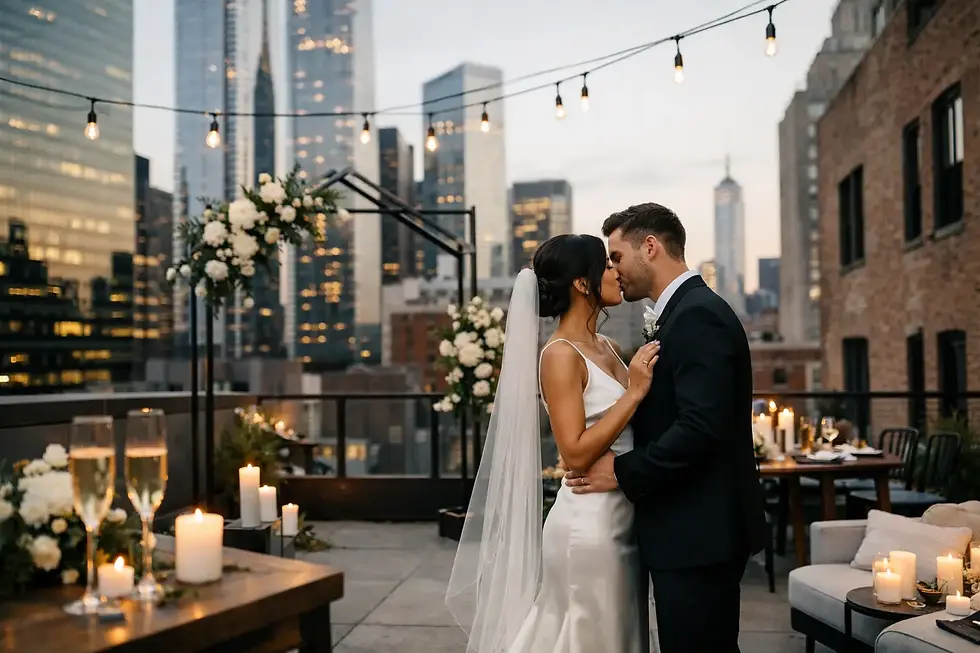
Picture the moment after your ceremony: cocktails in hand, guests spilling into a glowing courtyard, small plates making their way around the room, and no long stretch of assigned-seat waiting before the fun begins. This guide to cocktail style wedding receptions is for couples who want their celebration to feel polished but relaxed, social but still special.
A cocktail-style reception trades the traditional plated dinner and rows of round tables for movement, conversation, and a more flexible rhythm. It can be a beautiful fit for weddings of 50 to 150 guests, especially for couples who care about great design, good food, and a party that feels personal rather than overly programmed.
What Is a Cocktail-Style Wedding Reception?
A cocktail-style wedding reception is built around passed appetizers, food stations, drinks, lounge seating, and mingling. Guests are not expected to remain at one assigned table for the evening. Instead, they move between the bar, bites, conversation areas, dance floor, and any outdoor spaces you have incorporated into the event.
This does not mean guests are left standing around with one tiny canapé. A well-planned cocktail reception offers substantial food, plenty of places to sit, and a clear event flow. The difference is that seating supports the party instead of dictating it.
For many Texas couples, this format is a fresh spin on the wedding reception. It makes room for more interaction across friend groups and families, gives the décor a less formal feel, and often creates a livelier transition from ceremony to celebration.
Why Couples Choose a Cocktail-Style Reception
The biggest advantage is energy. At a traditional dinner, guests tend to settle into their assigned seats and stay with the same small group for much of the night. A cocktail reception encourages your college friends to meet your new in-laws, your cousins to find the dance floor, and everyone to enjoy the room as part of the experience.
It is also an especially strong choice when the venue itself has personality. Historic brick, industrial details, a courtyard garden, statement lighting, or a beautiful bar can all become part of the guest experience rather than simply a backdrop behind a head table. At The Laundry Event Hall, for example, couples can use indoor gathering spaces and the courtyard to create distinct moments throughout the evening.
There is a budget consideration, too. Skipping a formal plated meal can reduce rentals and service needs, but it does not automatically make the reception less expensive. High-quality stations, generous passed bites, premium bar service, and lounge furniture can add up. The goal is not to choose cocktail style as a shortcut. Choose it because it matches how you want guests to feel, then build a budget that serves that experience.
Plan Food That Feels Like Dinner
The most common mistake with cocktail-style receptions is underfeeding guests. If your event takes place during a typical meal time, your menu needs to satisfy people as fully as a dinner would. Guests may be more relaxed without a formal seat, but they will still expect enough food to enjoy the night.
Start with substantial stations that guests can return to throughout cocktail hour and the reception. Think carved meats, tacos, pasta, sliders, seafood displays, elevated comfort food, or a chef-attended regional station. Passed appetizers work best as a complement, bringing variety and a little theater to the room. They should not carry the entire meal on their own.
Timing matters as much as quantity. Have food available soon after the ceremony, particularly if guests have traveled from Houston, Austin, College Station, or beyond. Keep stations open long enough that late dancers and guests busy catching up do not miss the meal. A later snack, such as mini chicken and waffles, fries, street tacos, or a late-night sweet treat, is a smart way to keep the party going.
When choosing the menu, consider how easy each item is to eat while standing. Saucy dishes, oversized portions, and foods requiring a knife can work at a station with tables nearby, but they are less practical for a roaming crowd. Small plates and handheld options are not just trendy here. They make the format work.
Build Seating for Comfort, Not Attendance
You do not need a chair for every guest, but you do need enough comfortable places for every type of guest. Grandparents, pregnant guests, parents with young children, and anyone wearing formal shoes will appreciate having a place to settle in.
A helpful rule is to provide seating for roughly 60 to 75 percent of your guest count, then spread it thoughtfully across the venue. Mix cocktail tables with stools, small rounds, soft lounge groupings, and a few standard-height tables. This creates options without making the room look like a conventional banquet setup.
Keep your most accessible seating close to the action but out of the main traffic lanes. Guests should be able to enjoy conversation, see key moments, and get to the bar or restrooms without navigating a maze of furniture. If you are using an outdoor courtyard, offer enough indoor seating as a backup for Texas heat, a surprise shower, or guests who simply prefer air conditioning.
Give the Evening a Clear Flow
A relaxed reception still needs a plan. Without one, guests can be unsure where to go after the ceremony or miss important moments while they are outside chatting. Your timeline should feel easy, but it should guide the room.
After the ceremony, invite guests directly into the cocktail area with drinks and immediate appetizers. This gives you time for family photos while guests are already enjoying themselves. Once you make your entrance, move into a short welcome or toast, then open the food stations with a clear cue from your planner, DJ, or band.
Save a few moments that bring everyone together. A first dance, parent dances, cake cutting, a heartfelt toast, or a private last dance can give the night shape without turning it into a rigid schedule. The key is to keep formalities brief and place them where they will not interrupt the best energy in the room.
Your floor plan should help, too. Position the bar where it is easy to find but not blocking the dance floor. Place food stations far enough apart to prevent one long line. Create a natural path between indoor and outdoor spaces. When guests can move comfortably, the reception feels effortless.
Make the Bar Part of the Experience
A cocktail-style wedding gives the bar a bigger role, which is often a very good thing. A full bar, a pair of signature cocktails, and appealing nonalcoholic options can make the reception feel considered from the first toast onward.
Keep the menu focused. Two signature drinks are usually plenty, especially if they can be batched quickly. Add beer, wine, sparkling water, and a zero-proof option that feels celebratory rather than like an afterthought. A citrus spritz, hibiscus cooler, or alcohol-free margarita works beautifully for a warm Central Texas evening.
Talk with your bar team about service speed and guest count. One bar may be enough for an intimate event, while a larger crowd or a short cocktail hour may benefit from a second service point. Water should be visible and easy to grab all night, particularly for outdoor celebrations.
Choose a Venue That Can Handle Movement
Cocktail receptions look easy when the venue is designed for flexibility. They become complicated when the only usable room is either packed with tables or too large to feel connected. Look for a venue with defined areas that can support a ceremony, bar, food stations, lounges, dancing, and quiet conversation without separating guests from the celebration.
Ask how the venue handles weather plans, catering access, bar service, furniture, lighting, and transitions between spaces. Planning support is valuable here because cocktail-style events have more moving parts than a single-room dinner. The right team will help you map out guest flow before the room is set, not after guests arrive.
This format may not be ideal for every wedding. If your families strongly value a formal sit-down meal, if many guests have mobility concerns, or if your group is more comfortable with a traditional reception structure, a seated dinner may be the better fit. You can also blend both approaches by offering a generous station dinner with assigned tables, then creating lounges and an open dance floor afterward.
The best cocktail-style reception feels generous, not casual in the careless sense. Give guests excellent food, comfortable places to land, a reason to move through the space, and enough time to enjoy the people they came to celebrate. When those details are in place, the result is a wedding that looks elevated, feels genuinely fun, and leaves room for the memories no seating chart could plan.


Comments