How to Plan a Wedding Rain Backup That Works
- schwartzadrienne
- 3 days ago
- 6 min read
A Texas wedding forecast can shift from sunny to stormy faster than the wedding party can finish getting ready. Knowing how to plan a wedding rain backup means you do not have to watch the sky all week or make a last-minute decision that changes the feel of your day. The right plan protects the experience you have worked hard to create - and gives everyone, including you, room to celebrate.
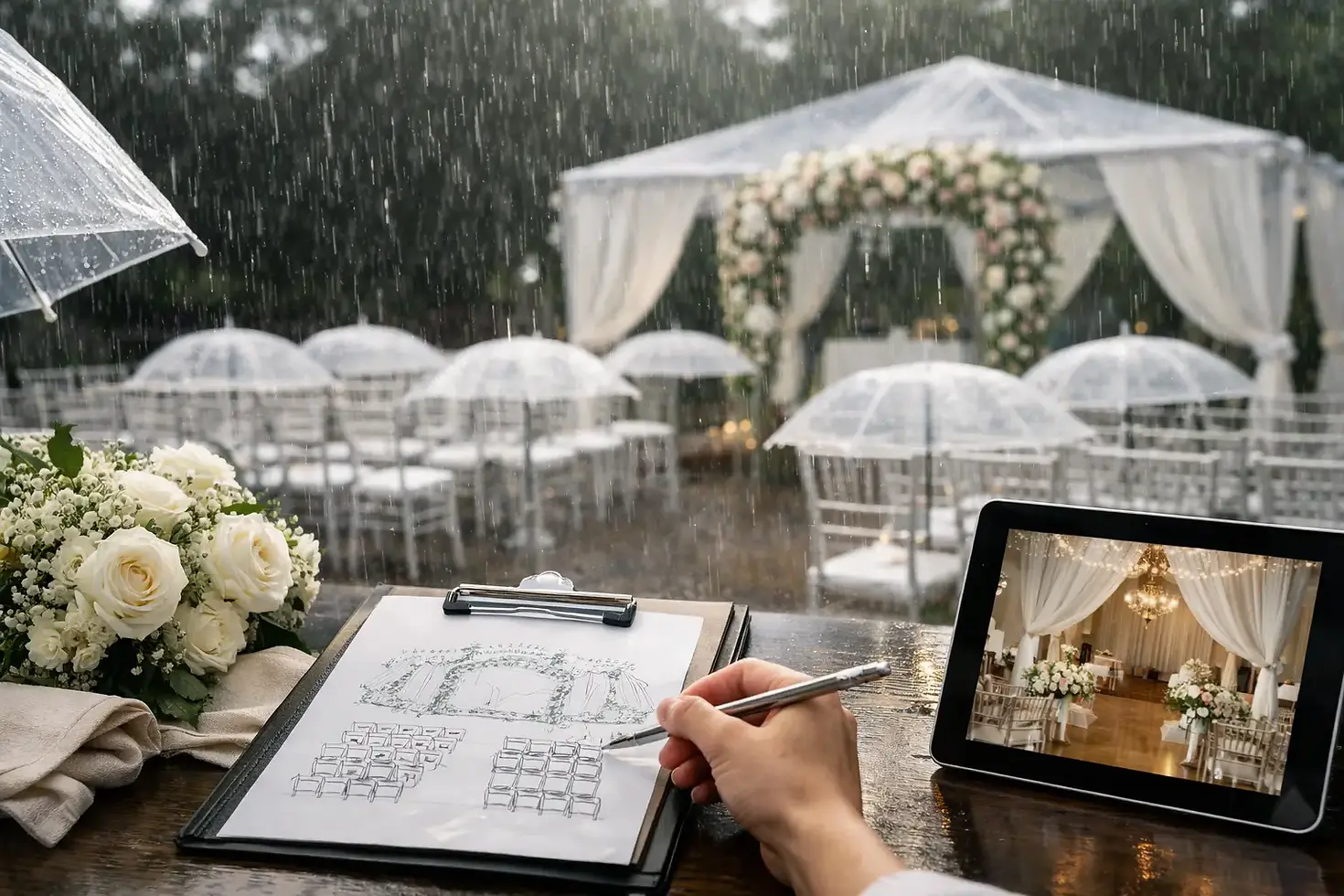
A rain backup is not an afterthought or a lesser version of the wedding. It is a second, fully considered setting that feels intentional, looks beautiful in photos, and keeps guests comfortable. Whether your ceremony is planned for a courtyard, garden, patio, or open lawn, a little advance planning turns a weather pivot into one small part of a very good day.
Start Your Wedding Rain Backup With the Venue
Before choosing flowers, furniture, or ceremony timing, ask a simple question: where will every part of the event happen if rain is in the forecast? The answer should cover more than the ceremony. Think through guest arrival, cocktail hour, dinner, bar service, dancing, portraits, and the path between each moment.
An indoor venue option is usually the easiest answer because it removes the uncertainty of wet ground, wind, temperature swings, and vendor setup delays. For couples hosting 50 to 150 guests, confirm that the indoor space can comfortably hold your full guest count, not just a scaled-down version. A room that is lovely for dinner can feel tight if it also needs to host a ceremony, cocktail hour, and dance floor.
Ask your venue when the weather decision needs to be made and who has the authority to make it. Some spaces need several hours to flip a room or move rentals inside. Others have a ready-to-use indoor ceremony arrangement. Clear timing prevents the most stressful version of a rain plan: guests arriving while vendors are still figuring out where chairs belong.
At a venue with flexible ceremony and reception spaces, such as The Laundry Event Hall, the most polished backup often feels less like Plan B and more like another great way to use the building. Historic texture, warm lighting, and a well-designed room can make an indoor ceremony feel personal and elevated, even when the original plan involved the courtyard.
How to Plan a Wedding Rain Backup Without Losing Your Style
The biggest concern couples have is understandable: “Will an indoor backup still look like us?” It can, if you design for it early instead of treating it as an emergency setup.
Choose a ceremony design that can move indoors with minimal changes. A floral installation, aisle markers, welcome sign, and meaningful focal point should work in both locations. If your outdoor ceremony depends on a large arbor, make sure it fits through doors and has a designated indoor placement. If it cannot move, create a simpler indoor focal point with florals, candles, or draping that still feels connected to the larger design.
Lighting deserves extra attention. Rainy weather can make an afternoon feel surprisingly dark, while evening storms can reduce natural light even further. Ask about indoor lighting, dimmer controls, and where your photographer can create flattering portraits. Candles, string lights, and accent lamps can add warmth, but they should complement the venue lighting rather than carry the entire room.
Your color palette also matters. Soft neutrals, rich greens, warm metals, and saturated florals tend to photograph beautifully indoors. That does not mean you need to redesign your wedding around the forecast. It simply means your backup should support your aesthetic, rather than leave it at the mercy of fluorescent lighting or a bare meeting room.
Build a Timeline That Can Bend
A flexible timeline is one of the smartest things you can give yourselves. Rain does not always mean a full-day washout. It may arrive for 30 minutes during portraits, clear before the ceremony, or show up just as guests begin cocktail hour.
Work with your planner, coordinator, and photographer to identify the moments that can move. Portraits might happen inside before the ceremony or under covered architecture after a shower passes. Cocktail hour can begin in an indoor bar area. If your ceremony is outdoors but conditions are safe, a short delay may be worth it. The right choice depends on guest comfort, vendor availability, daylight, and how stable the forecast looks.
Avoid building a schedule that relies on every minute going perfectly. Leave extra time for transportation, room resets, and photo coverage. A 20-minute buffer can make the difference between a calm pivot and a rushed one.
Give Guests Clear Expectations
Guests do not need a weather briefing, but they do need useful information. If there is a real possibility of rain, include a brief note on your wedding website or pre-event message asking guests to bring a light layer and wear shoes suitable for the setting. If the ceremony location changes, communicate it clearly and early through the channels your guests are already using.
On the day itself, signage and a confident welcome team make a major difference. Guests take their cue from the atmosphere around them. When they know where to go, have a dry place to wait, and can grab a drink, rain becomes a detail rather than the story of the evening.
Protect the Details That Matter Most
A thoughtful weather plan also protects your investment. Paper goods, ceremony programs, place cards, cake displays, audio equipment, and delicate florals all need dry, secure locations. Ask each vendor what they need if the event moves indoors or if outdoor conditions become damp or windy.
Your rental team should know both layouts in advance. This includes chairs, tables, linens, lounge furniture, heaters, fans, and any tenting. Tents can be a good solution for a light drizzle or shade, but they are not automatically the best rain backup. They require enough space, proper anchoring, sidewalls for wind-driven rain, flooring for muddy conditions, and a plan for temperature. A tent that is booked too late or designed too casually can cost more and feel less comfortable than using a beautiful indoor room.
Consider the guest experience from the parking area forward. Are there umbrellas available for the wedding party? Is there covered access for guests with mobility needs? Can older family members avoid uneven or wet ground? A stylish event should also be an easy event to attend.
Make a Rain-Day Photo Plan You Actually Love
Rainy-day wedding photos can be cinematic, intimate, and full of movement. The key is choosing them on purpose, not forcing everyone outside in a downpour. Tell your photographer which indoor spaces you love most, from brick walls and tall windows to a dramatic staircase, bar, or lounge area. Those locations become part of the shot list before the weather is ever a question.
Pack a few clear umbrellas if you want outdoor portraits in light rain. Clear umbrellas keep faces visible and let your attire remain the focus. Skip novelty umbrellas in bright patterns unless they genuinely fit your wedding style. Have towels nearby, designate someone to hold the umbrellas between shots, and keep expectations realistic. Ten joyful minutes outside can create beautiful photos. Forty cold, wet minutes usually is not worth it.
If rain changes your first-look location or ceremony backdrop, remember what the photos are really preserving: the people, the energy, and the moment you made a commitment. Great architecture, good light, and a relaxed couple matter far more than a specific patch of lawn.
Put the Plan in Writing Before Wedding Week
By the week of the wedding, everyone should know what happens under each likely scenario. Your planner or venue coordinator can create a simple weather plan that names the decision-maker, decision time, indoor layout, vendor arrival instructions, and guest communication approach.
Share it with your venue, caterer, florist, photographer, DJ or band, rental company, and wedding party. If you have parents or a trusted friend who may be tempted to offer opinions in the moment, letting them know the plan ahead of time can help, too. The goal is not to invite a committee decision. It is to ensure that the people executing the day are working from the same playbook.
Then give yourselves permission to stop checking the forecast. Weather apps are useful, but they cannot tell you whether your guests will feel welcomed, whether your room will glow at candlelight, or whether the people you love will show up ready to celebrate. A well-planned rain backup gives you something better than perfect weather: confidence that your wedding will still feel completely yours.



Comments